

Team
Microscopy and Spectroscopy of Surfaces group at the ISI of the CAS in Brno
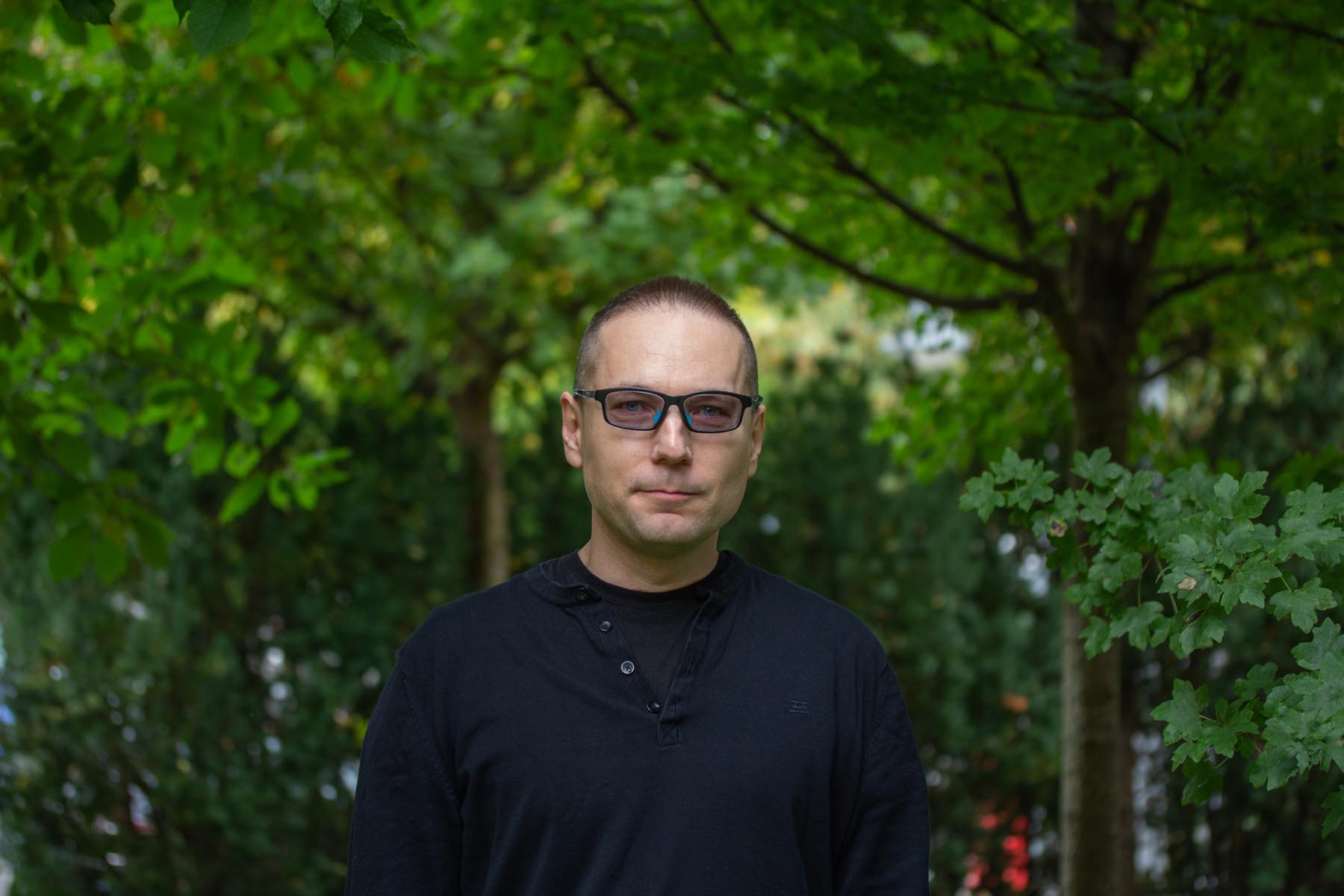
Mgr. Aleš Paták, Ph.D.
Scientist
The research of Dr. Paták is driven by a fascination with the intricate ways low-energy electrons interact with different materials. He explores this fundamental dance of particles through both theoretical and experimental studies. His work involves detailed investigations into the behavior of electrons, from how they reflect off steel surfaces to their complex interactions with advanced materials like graphene. To achieve this, he uses a combination of sophisticated simulation techniques, including density functional theory and many-body perturbation theory, with powerful software packages like Quantum Espresso, Yambo, and turboEELS.
He is also passionate about pushing the boundaries of what we can see with advanced electron microscopy. A significant part of his work is dedicated to developing and refining scanning electron microscopy (SEM) techniques. This includes creating new methods to quantify high-resolution Scanning Transmission Electron Microscopy (STEM) images and pioneering techniques for imaging delicate biological tissue sections with very slow electrons. His approach combines hands-on experimental work with detailed Monte Carlo and multislice simulations using tools like Geant4 and abTEM.
Beyond his work in electron microscopy, He has a deep interest in theoretical physics and mathematical modeling. This has led him to some exciting, "out-of-the-box" explorations, such as investigating the gravitational analogues of electron vortex beams—what he calls gravitational Bessel waves.
His toolkit also includes Energy-Dispersive X-Ray Spectroscopy and Cathodoluminescence (CL) to study a wide range of samples, including plasmonic structures. To ensure his experimental CL measurements are robust, he corroborate them with boundary element method simulations using MNPBEM. Through all these efforts, he aims to contribute to a deeper understanding of the quantum world and develop new tools for scientific discovery.